Thursday, January 23, 2014
The Mystical and Enchanting Siquijor


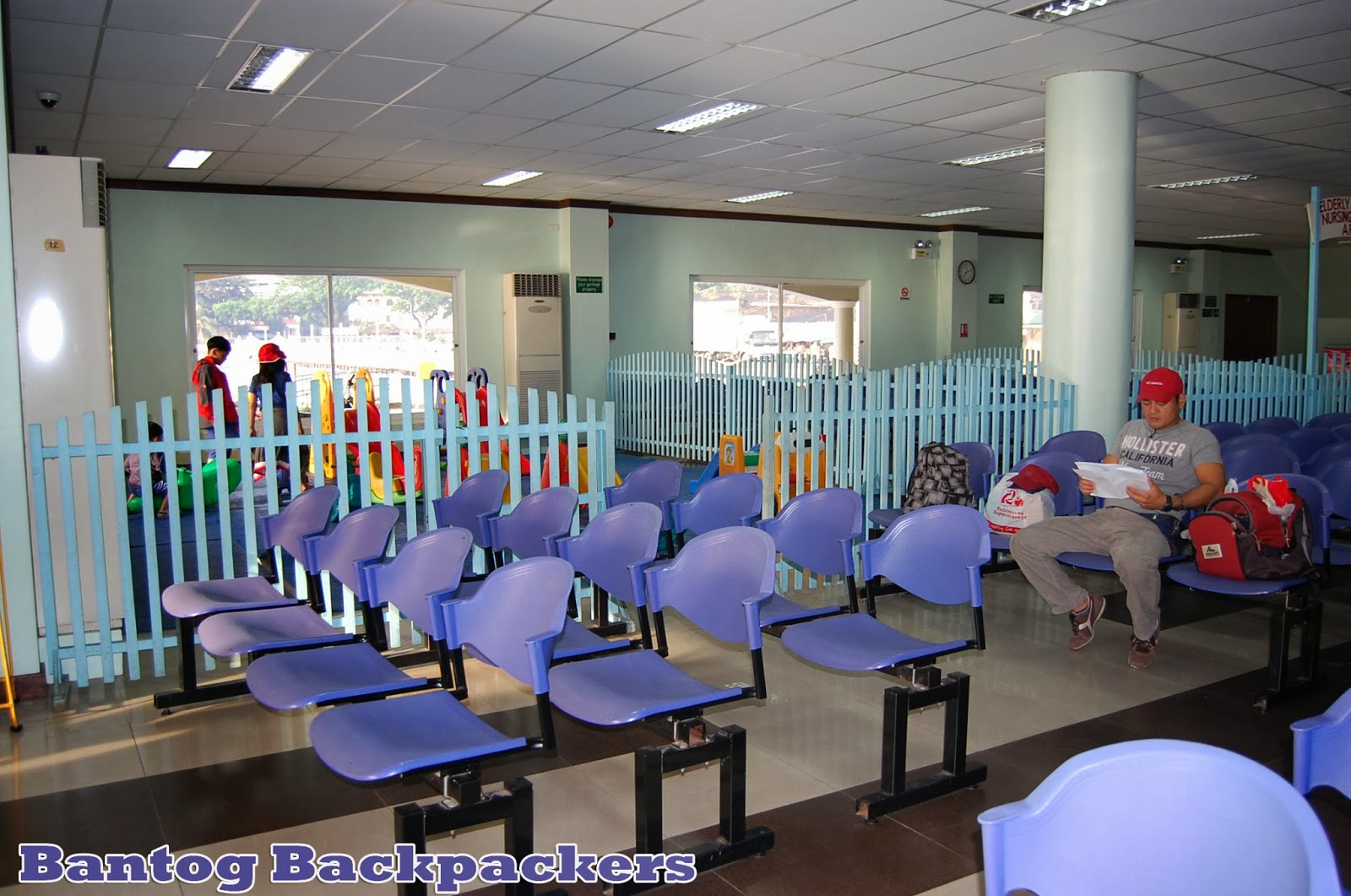
It is our second day of our Dumaguete-Siquijor-Cebu trip. And on top of our list is to tour the mystical Siquijor. It is not yet boarding so my kids enjoyed the playground area of the ferry terminal.

 |
| while daddy's waiting... |
 |
| boarding... |

 |
| our smooth sailing ride |
 |
| waiting for dolphins to fly =) |
 |
| awww!!! so gwapo! (photographed by baby James) |
 |
| they're just so cute... hope you'll always be my babies =) |
I noticed that they are only few locals traveling from Dumaguete to Siquijor... there are more foreign tourists. When we were in Dumaguete and asking for directions on how to get to the port going to Siquijor, they were asking why are we going there and if we have relatives living in the province. We said that we wanted to see how beautiful the province is and that I've searched that Siquijor has the best beaches in the country. If you haven't seen the early days of Boracay, then I guess you should see and witness how amazing their beaches are. You can take a peek here http://wanderingdylan.com/2011/03/13/siquijor-beaches-explore/
 |
| approaching Siquijor |
 |
| Siquijor... more famous to foreigners than to local tourists |

 |
| just arrived at the beautiful province of Siquijor |
Siquijor is once a part of Bohol and then Negros Oriental. Siquijor didn't become an independent province until 1971, although economically and politically it still seems like a little sister to its larger neighbors. This seems unlikely to change as long as Siquijorenos continue to migrate to Cebu, Manila or abroad seeking work. Larena is Siquijor's main port and Siquijor town its capital.
 |
| sa port pa lang panalo na ang beach!!! |

Siquijor's long ago reputation as a place of magic and sorcery both attracts visitors and keeps them away.
Siquijor is also well known for its festivals that focus on primitive
healing rituals where incantations are sung while the old folks make
potions out of herbs, roots, insects and tree barks. In hushed talks,
locals would share a story or two about folk legends pointing to the
existence of witchcraft and witches in the island.
Among the many attractions are the beaches, caves, waterfalls, Bandilaan Natural Park, and butterfly sanctuary. White sand beaches make up most of the 102-kilometer coastline of Siquijor.
The coral reefs ringing the island offer some of the best diving in
the Philippines for snorkelers and scuba divers. Dive courses are
conducted by several dive operators on the island in version of PADI,
CMAS and NAUI. Siquijor was declared a marine reserve in 1978.
During 2007, data from the Philippine Department of Tourism showed
that Siquijor posted the highest growth in visitor arrivals among the
four provinces in region 7
(Source : http://en.wikipedia.org/wiki/Siquijor)


Siquijor is a small island in Visayas. Siquijor Island or Isla del Fuego as the Spanish named it, due to the intensity of fire flies, lies some 22 km east of Southern Negros. Legend has it that Siquijor rose from the sea during a tremendous thunder storm sited as evidence is fossils and shells which can still be found in Mount Bandila-an, Siquijor's highest point. While the coastline is mostly white sand beaches, oceans full of tropical marine life the interior is mountainous.
(Source : http://wikitravel.org/en/SiquijorSt. Francis de Assisi Parish Church and Bell Tower located near Siquijor, Siquijor port. The first tourist attraction right after arriving.

Outside the port, there are trikes and fiera-type vehicles that can tour you around Siquijor... the entire 76 kilometers of the province. Fiera-type vehicles can be rented for Php1,800 and trikes at Php1,100.00.
Motorbikes can be rented for a whole day for Php300. Just check if the helmets are already included in the rental. Some are requiring that the motorbike be returned before sunset. During the entire day of touring Siquijor, You might think that you are in another country, because the foreign tourists here are everywhere and driving their rented motorbikes.
Our first stop .... Capilay's Spring Park

Capilay Spring Park is a natural spring fed swimming pool in the center of San Juan.


 |
| Naks! dalaga na kasi eh |

Capilay Spring Park is a kid-friendly park =)

 |
| our trike driver/tour guide kuya Joseph Rey Larajosa whom you can reach at cel no. 0926-4110116 |
 |
| one of the beach resort/hotel in San Juan |


the enchanted old Balete tree
To Filipinos, Siquijor has an aura of mystery and magic; its mountainous interior is home to a number of mangkukulam (healers) who practice NOT with spooky incantations BUT with smelly
herbs and soothing oils. This little island, the smallest of the four
Central Visayas provinces, is dotted with laid-back beach resorts.
(Source : http://www.lonelyplanet.com/philippines/the-visayas/siquijor)
(Source : http://www.lonelyplanet.com/philippines/the-visayas/siquijor)


Instant foot spa, haha =)

There's no entrance fee at the site but there is an optional donation box for the maintenance of the Balete tree area.
 |
| the caretaker of the old tree |
Kuya Joseph, our driver/tour guide just stop here and we took some photos...


 |
| my favorite jump shot by James and Josh |


From San Juan, the town of Lazi,
home to the famous parish church and convent, is a good fifteen
kilometers drive. It is in this southern tip of Siquijor Island that the
commanding parish church and convent buildings stand ground amidst
stately acacia trees. Known as the biggest convent in the whole of Asia,
conceptualization and construction of the St. Isidore Labradore Convent
began in 1857 by Augustinian Recollects and was completed by Filipino
artisans in the year 1884. In the 1970’s, both the church and the
convent were declared National Historical Shrines.
(Source : http://www.dumagueteinfo.com/lazi-convent-siquijor.php)
(Source : http://www.dumagueteinfo.com/lazi-convent-siquijor.php)

 |
| St. Isidore Convent (in front of the church) |
The convent
is an imposing U shaped two story structure whose size is approximately
50 x 50 meters – a size considered to be colossal in that period of
time. This building was used by friars for among other things, a place
of rest and recreation. It is a typical Bahay na Bato (stone house), one
with a ground floor made of a thick stone layer and the second level,
of hardwood studs and panels. Construction for the convent began in 1887
and finished in 1891.
Work on the church and convent is
attributed to Fray Toribio Sanchez who took the initiative of building
the new convento in 1887 by merely using coral blocks and available
wood. It was reported that before the construction of the St. Isidore
Church and Convent, there was already an existing church and convent but
of poor and deteriorating conditions. Still other projects begun by the
friars were the Casa Real, Escuela, some bridges and agricultural irrigation systems.


Cambugahay Falls


Cambugahay Falls is just 2 kilometers from Lazi town. It consists of three cascading waterfalls. The water is so clean and green and looks so inviting. My two boys took a dip at this warm waterfalls.


And to end our tour, we asked our trike driver/tour guide to bring us to a souvenir shop. The shop is located near the port. Aside from the usual shirts, mugs, ref magnets and key chains, these are what we saw, hehe =)
 |
| gayuma (love potions) for Php200 |
 |
| healing herbal oils |


 |
| time to go back to Dumaguete, next time overnight na talaga sa beach... |
 |
| the beach at Siquijor Port |

and here http://wanderingdylan.com/2011/04/03/siquijor-places-part-2/
Tuesday, January 21, 2014
Manjuyod Sandbar
Manjuyod Sandbar was our last destination for our 5-day vacation in Negros Oriental. It was quite raining but we still proceed to Bais City.
From Dumaguete, we hailed a bus going to Manjuyod, Negros Oriental. The bus ride costs Php48 and travel time took an hour. We were dropped at Mercado de Bais in Bais City and flagged a trike going to Canibol Wharf (opposite Capiñahan Wharf) for Php80 for the six of us.
There was an LPA and the it was raining so hard, so we are having second thoughts crossing Manjuyod. Though still thinking twice, my husband already negotiated the boat that we will be using. It's regular rate is Php2,500 with dolphin watching already included in the package, but with the angry waves the boatman said it will be impossible to get to the Tañon Strait, the dolphin watching area. It is Php1,500 if we will be crossing Manjuyod sandbar only, we bargained it for Php1,300.


This pristine 7 kilometer stretch of premium white sand can be accessed via a short 15 minute boat ride from Capiñahan Wharf in the South Bais Bay, Bais City Negros Oriental.
It is basically an island towards the North Bais Bay in the Tañon
Strait that emerges only during low tides. On the island you can find
native wooden houses built on stilts – and which, during high tide,
appears to be floating on the water. These cottages could be rented for overnight stays and can be booked at the Bais City Tourism Office.

While we were in the middle, my husband said that we should get back, Janelle said "kaya yan!"... The boatman said that we can cross safely. I know that safety must first be considered most especially when you're traveling with kids. Last na to, I'm just glad we crossed Manjuyod sandbar. We hope we can be back here when it's really sunny and of course, dapat low tide =)
Though technically belonging to the jurisdiction of the neighboring Manjuyod town, the sand bar
is closely associated to Bais City because of its proximity and
popularity in the Bais area. It is also a major stopover during dolphin
and whale watching group tours organized by the Bais City Tourism
Council. The boat is temporarily anchored so that the guests can picnic,
swim, sunbathe, and laze around, snorkel or scuba dive in the waters
surrounding the sand bar.
The Manjuyod Sand Bar is an estimated
600 hectare total strip area, including the submerged portions. Also
known as the Sumapao Shoal, it is a certified tourist attraction
because of its unique characteristic. It has been said that among the
tourist spots in the vicinity, this one has the most potential.


When planning to
visit the Manjuyod White Sand Bar, it is advisable to book in advance
for a boat to take you there. The Bais City Tourism Office can be
reached at (035)541-5161 / 402-8174 Fax (035)402-8181. Boat rate is
P2,500 for a group of 15 and P3,000 for a group of 20. This is already
basically for an entire day of use.
The organized tour package includes dolphin and whale watching at Tañon Strait, stopover at Manjuyod Sand Bar
for lunch and other activities and finally, a visit to the Bird
Sanctuary and Mangrove Park before heading back to the wharf. You can
opt to bring your own lunch or have the Bais City Tourism group cater
the meal for you for around 100 – 200 pesos per head.
Manjuyod sandbar if you arrived on a low-tide =)

photo extracted from www.thepinaysolobackpacker.com

photo owned by Glenn B. Mendoza
TIPS: Before you visit this amazing place, make sure to check your calendar and learn when it's low-tide and high-tide. The sandbar is submerged at high tide, making it impossible for you to step in to the sand, like what happened to us.
Contact Hadji Adiong at 0947-5255390 of Canibol Wharf and tell him we recommended him to you so you can avail of boat discount, hehe =)